

Grout Pump
To get the mix where you want it when you want it there is no need to look any more, use concrete and grout pumps. Grout pumps can be used to fill small voids and door jams and they are available in either manual, electric, gas, hydraulic and air powered. Concrete pumps are strong enough to lift up many stories and even lift slabs of concrete.
The pump is very applicable in the transportation of corrosive materials and even abrasive ones. It can quickly transfer cement to different pipes to provide a smooth and creamy finish. These pumps have a holding hopper that holds the liquid and keeps itself full. You can get grout pumps in different sizes depending on your needs.
Production Market
Our machines exported over 70 countries and regions and one million GUTE machines have serviced the world construction sites.
Leading brand
As a Enterprise Technology center in Chengdu City, GUTE machinery has became the leading brand of light construction machinery in china, as well as the only customized solution service provider for light construction machinery in China. GUTE constantly strides forward to the world brand in the field of machinery.
Our Service
Pre-sale service involves plan proposal, 3D simulation, verification, and co-development.
Sale service involves online consultation, planning processing plant, provide construction budget according to project needs and preliminary research, following up the progress of the project according to the project situation in real time during the project.
-
 Air Compressor Screw Grout Pump without MixerAir compressor screw grout pump without mixer GJB200 Anchor bolt grout pump can be widely used inAdd to Inquiry
 -
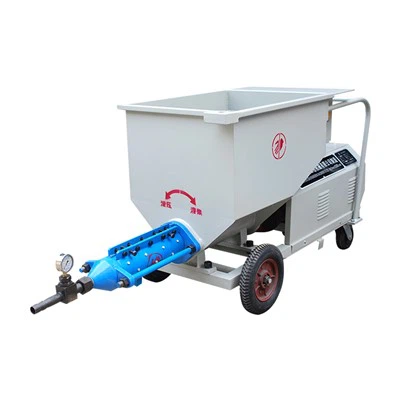 5.5Kw Screw Grout Pump without MixerThe machine can be used for anchoring bolt grouting, consolidation grouting, and backfill groutingAdd to Inquiry
 -
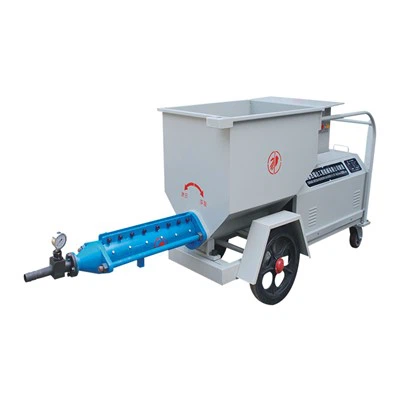 9.0Kw Screw Grout Pump without Mixer9.0Kw screw grout pump without mixer GJB400 Grout pump is equipped with a national standardAdd to Inquiry
 -
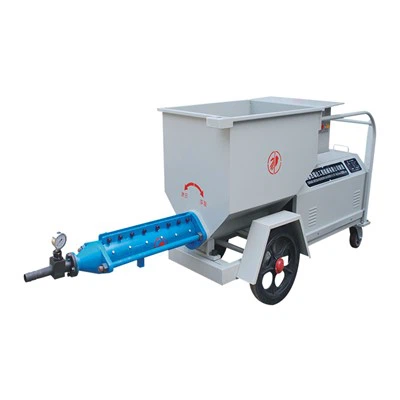 Backfilling Screw Grout Pump without MixerBackfilling screw grout pump without mixer GJB500 grout pump owns novel pump structure and uniqueAdd to Inquiry
 -
 Grout Mixer and PumpGrout mixer and pump GJB300B integrates a mixing device with fast mixing speed. It utilizesAdd to Inquiry
 -
 Grout Mixer and Pump with A Vertical Mixing DeviceGrout mixer and pump with a vertical mixing device GJB300BS integrates a vertical mixing deviceAdd to Inquiry
 -
 Grout Mixer and Pump with Remote ControlGrout mixer and pump with remote control GJB400B integrates a mixing device with fast mixing speed.Add to Inquiry
 -
 Grout Mixer and Pump with Higher Motor Power RateGrout mixer and pump with higher motor power rate GJB500B integrates a mixing device with fastAdd to Inquiry
 -
 Versatile Grout PumpThis all-in-one grouting data recorder pump is widely applied to grouting works for anchor boltsAdd to Inquiry


Benefits of Grout Pump
Ensures higher accuracy and better quality
A grout pump means you can pump concrete exactly where it’s needed, so there’s minimal waste or mess.
Faster concrete/grout pour
If you hire a grout pump, you’ll eliminate the unnecessary costs involved in using manual labour and wheelbarrows to transport the material AND you’ll save time, so your customers will benefit.
Added flexibility
When you buy concrete equipment, you not only make a considerable financial commitment but you’re also limited in your equipment choices. Hiring gives you far greater flexibility as you can choose the model to suit the job and scale up or down as your needs change.
Qualified technical advice
When you hire equipment from a specialist supplier, you get the benefit of their knowledge and experience. They can advise you on the best grout pump for a particular project and will pass on all their expertise so that you can improve your business.
Type of Grout
Different types of grout require a different kind of grout pump because they don’t all behave the same. Some grouts, like cement and epoxy, don’t pump as efficiently as others because of their thickness and chemical makeup.
Pressure
The pressure output of a grout pump relates to how fast and far the pump can spray grout material. Low-pressure pumps can save you money if your project doesn’t require high-pressure output. However, a high-pressure pump might be necessary for large construction projects, like grouting tunnels or repairing sewer linings.
Light vs. Heavy-Duty
From small to large jobs, grout pumps can do it all. But using a heavy-duty grout pump for light applications will cost you more in the long run. You can find light-duty grout pumps that handle smaller tasks that don’t require as much pressure and pumping speed as others. Light-duty pumps are easy to operate, portable, and lightweight for small-scale projects.
Portability
Handheld grout pumps are the most portable because they’re lightweight and able to be held in your hands. However, many larger heavy-duty grout pumps also come with features, like a pull handle and wheels, to make them portable around a job site. It’s important to remember that some grout pumps require electricity to run, so you’ll need to ensure that you have a proper power supply available at your worksite.
Moving Parts
The moving parts of a grout pump refer to anything that needs to move internally for the grout pump to work. Usually, the more moving parts there are, the more complicated a grout pump gets to clean, maintain, and repair. Grout can also build up on the internal components over time if you’re not diligent about cleaning your grout pump thoroughly after each use. For the most straightforward use, look for a grout pump without moving parts that contact the grout.
What are the applications of grouting pumps?
Tunneling
Filling of voids and caverns
Sealing and stopping water inflows into construction
Anchoring of soil and rocks
Stabilization of loose material in the foreland of excavation.
Mining
Crossing of fault zones
Securing of the overburden
Lowering of permeability of the rock mass
Strengthening of coal in areas with rock burst risk
Foundation of Buildings
Anchoring of walls of construction pits
Micro piling in soil with low bearing capacity
Bridges & Roads
Repairing cracks in construction
Strengthening and sealing of brick and stone masonry on bridges
Inoculation of grouting material into the rock massive is done using grouting pumps. Piston type pump with electric or pneumatic drive is used. Grouting material is used while injecting grouting material into the rock mass. Grout pumps are precisely designed to transfer the pressure of the grouting material. It also prevents the back flow of the material from the borehole.

If you have a unique need for a pump, we can build you a custom pump or mixer. All you have to do is ask!
Configured horizontally or vertically and both configurations can use the 16” pneumatic tires or casters.
Pump was built for a customer in the mining industry that had a unique height constraint. The pump was made with two mixers and two hoppers for maximum output.
Pump was built around a hydraulic power pack that can be left in the unit or taken out.
|
5.5Kw screw grout pump without mixer GJB300 Grout pump |
||||
|
Parameters |
Unit |
Data |
||
|
Output |
L/H |
2000 |
3500 |
|
|
Motor power rate |
kw |
5.5 |
||
|
Sand grain size |
mm |
≤3 |
||
|
W/C |
|
≥0.3 |
||
|
Grouting pressure |
Mpa |
2.5-5.0(adjustable) |
||
|
Conveying distance |
Vertical |
M |
60(mortar)/80(grout) |
|
|
Horizontal |
350 |
|||
|
Hopper volume |
L |
160 |
||
|
Total weight |
kg |
280 |
||
|
Size(length×width×height) |
mm |
1400×640×90 |
||
Selling all over the world

Technical & After Sales Service
By your side through installation to start-up
We offer one stop, total customer support for all Grout Pump products. Round the clock service comes standard, no matter what equipment issues you are facing. We pledge to focus on all the equipment details allowing you to focus on running your business.
Installation
Can provide assistance for final assembly and oversee all installation issues beyond those covered in the maintenance manual of your slurry product. We offer technical support for pump arrangement and explain layout design. We can also assist you with finalizing your site alignments.
Start-Up
Will review your start-up process using a step-by-step check list. Our technicians will ensure you have a complete understanding of each unit’s requirements. We can help you every step of the way through project wrap-up. We assist with pump and drive train assessment and pump/power train maintenance.
FAQ
As one of the leading grout pump suppliers in China, we warmly welcome you to wholesale cheap grout pump in stock here and get free sample from our factory. For customized service, contact us now.
Plate Compactor With Vibrating Plate Ram, Grout Mixer And Pump With Higher Motor Power Rate, Concrete Vibrating Hose